
From Banana to Breakthrough: What Real Academic Rigor Looks Like at The Mosaic Field School
It started with a simple question:
“How much of a banana is edible?”
What followed was not a worksheet.
It was not a memorized formula.
It was not a one-right-answer assignment.
It was a full academic investigation.
At The Mosaic Field School in Suwanee, Georgia, meaningful rigor often begins with something ordinary. In this case, a snack became a laboratory.
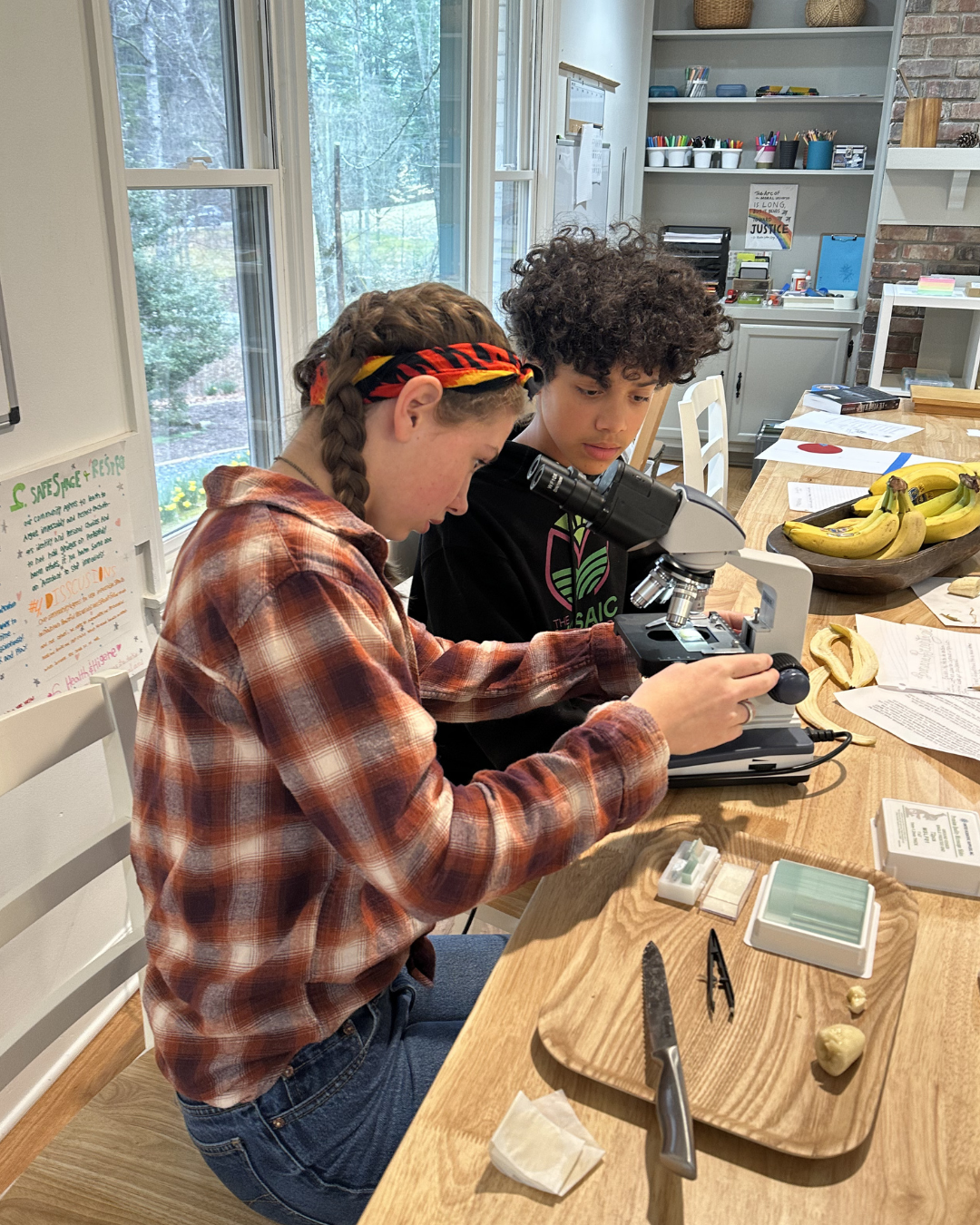
“Immediately, the classroom transformed into an interdisciplinary learning environment.”
Adolescents at The Mosaic Field School in Suwanee, Georgia engage in researching the answer to their question in their Montessori middle and high school.
The Question Behind the Question
When students examined a banana, they didn’t just eat it.
They asked:
What do we mean by “how much”?
What percentage of the banana is edible?
How much of its total mass becomes waste?
How accurate are our estimations?
How do we measure this precisely?
What variables might affect the outcome?
What do we mean by “edible”?
Immediately, the classroom transformed into an interdisciplinary learning environment.
The Mathematics of a Banana
Students engaged in:
Hypothesis formation
Estimation
Precise measurement using scales
Subtraction of peel weight from total weight
Percentage calculations
Comparison across samples
Error analysis and discussion
This wasn’t “extra credit.” It was core math instruction.
But instead of solving abstract problems detached from context, students constructed understanding through lived experience.
This reflects principles described by Jean Piaget, whose research demonstrated that children build knowledge actively through interaction with their environment — not passive reception.
Maria Montessori observed this time and time again for children of all ages. In Montessori education, this principle is foundational: “Education is experiences in the environment.”
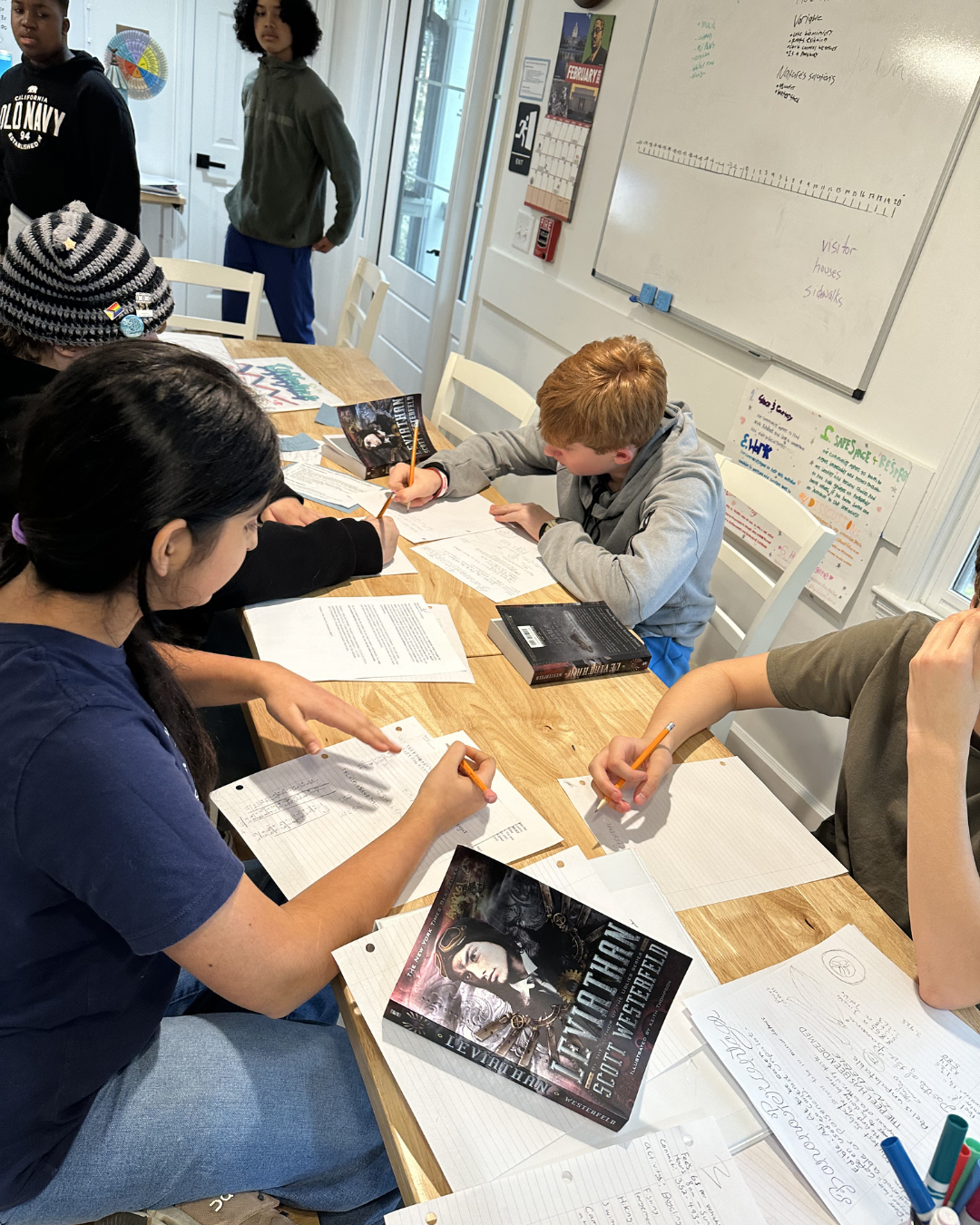
“But instead of solving abstract problems detached from context, students constructed understanding through lived experience.”
Teens describe their mathematical findings in their middle and high school Montessori private school.
Beyond Math: Interdisciplinary Rigor
What appears to be a simple food experiment quickly expanded:
Science
Biomass and organic waste
Variation in natural materials
Observational accuracy
Environmental Studies
Food waste awareness
Consumption patterns
Communication
Defending conclusions
Listening to counterarguments
Refining reasoning
Executive Function
Planning procedures
Sequencing steps
Sustaining attention
Revising hypotheses
True rigor is layered. Inquiry ignites curiosity.
It integrates disciplines rather than isolating them.
Rigor vs. Busyness
In traditional settings, academic challenge is often measured by volume:
More worksheets
More homework
More repetition
But research on deep learning suggests something different.
Rigor is not about speed.
It is about depth.
When students must design the method, gather data, analyze results, and defend conclusions, they are engaging higher-order thinking skills.
They are not just solving problems.
They are learning how to think.
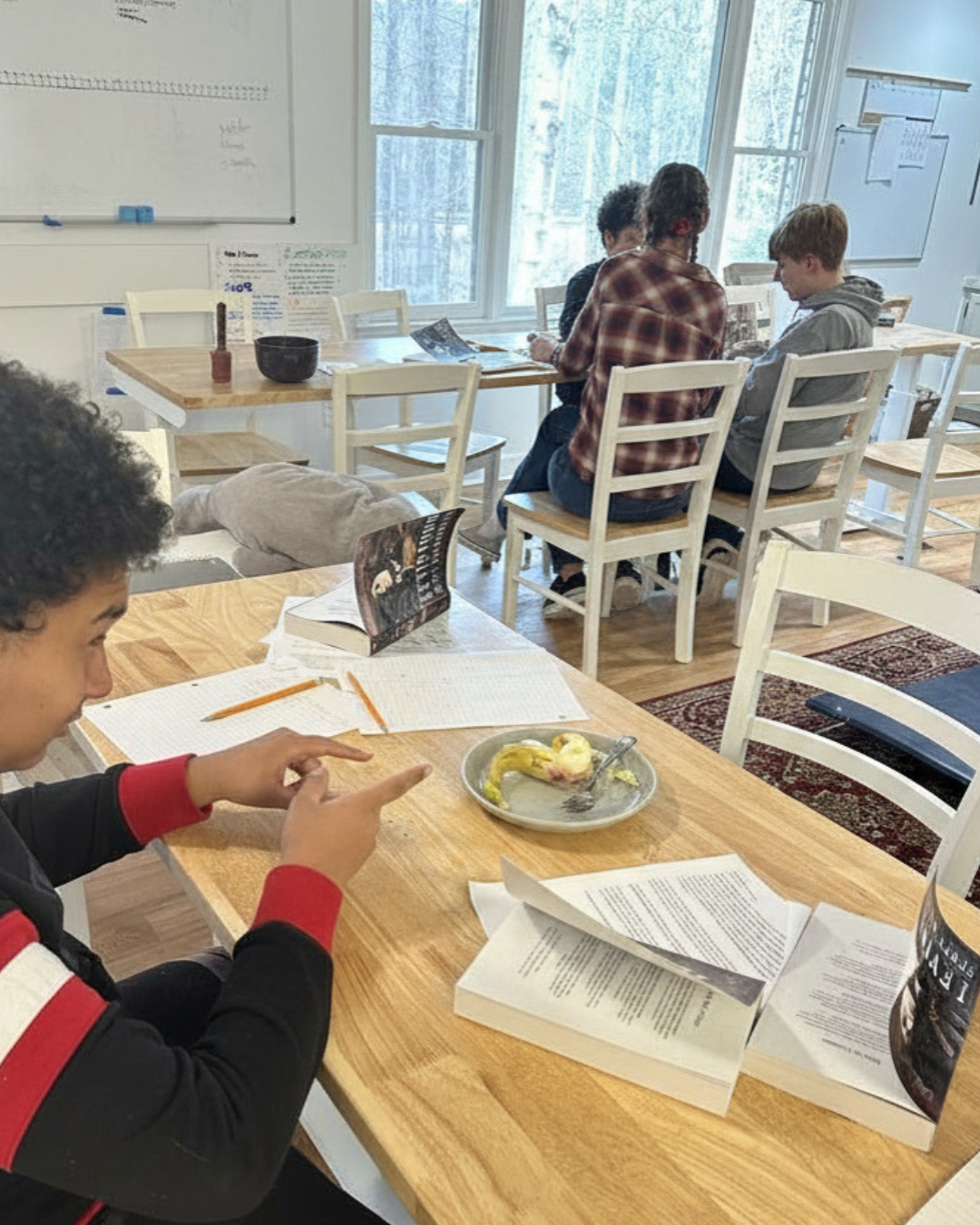
“They are not just solving problems.
They are learning how to think.”
Middle and high school students research the mathematical and scientific principles behind their question in their private Montessori school.
Constructivist Learning in Action
Dr. Maria Montessori believed that children learn best through purposeful interaction with real materials.
Modern neuroscience supports this insight. When learning involves:
Physical manipulation
Social discussion
Emotional engagement
Real-world relevance
Neural connections strengthen.
The banana investigation worked not because it was novel, but because it was authentic.
The math mattered. The outcome wasn’t predetermined. The process required judgment.
Flexible Thinking and Multiple Right Answers
One of the most powerful aspects of this lesson was variability.
Not every banana produced the same edible percentage.
Students discovered:
Natural variation exists.
Measurement precision matters.
There may be more than one defensible answer.
This cultivates cognitive flexibility — the ability to adapt thinking when new data emerges.
Flexible minds are strong minds.
Why This Matters Long-Term
Students who are trained to ask better questions outperform students trained only to provide quick answers.
Through investigations like this, students develop:
Analytical reasoning
Data literacy
Confidence in uncertainty
Comfort with intellectual debate
Transferable problem-solving skills
Respect for others
These are not skills for a test.
They are skills for adulthood.
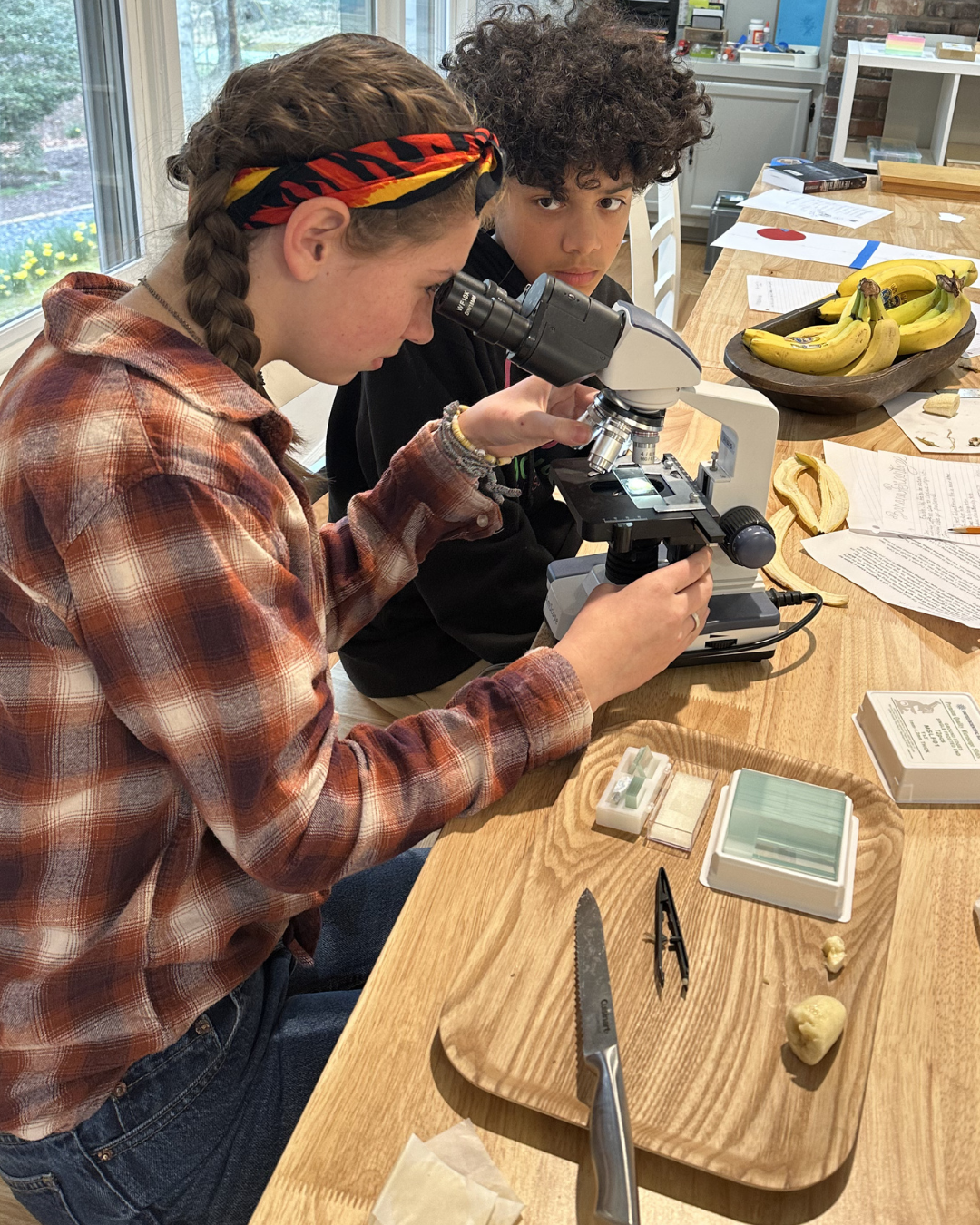
“Flexible minds are strong minds.”
Students in the adolescent program at The Mosaic Field School enjoy engaging in STEAM education often.
What Real Rigor Looks Like
At The Mosaic Field School, rigor is not louder. It is deeper.
It looks like:
Measuring before calculating
Debating before concluding
Revising before finalizing
Connecting disciplines instead of compartmentalizing them
It looks like turning a banana into a breakthrough moment.
The Bigger Picture
Families searching for alternative education in Georgia often ask:
“Will Montessori prepare my child academically?”
The answer is yes — but perhaps not in the way they expect.
Montessori education prepares students not only to solve problems, but to identify them. Not only to follow procedures, but to design them.
And sometimes, it all begins with asking:
“How much of a banana is edible?”